

































Yorkshire’s industrial and logistics sector is showing clear signs of continued growth.
In West Yorkshire and The Humber alone, industrial and logistics take-up reached 2.4 million sq ft in 2025. This is a 15% increase on the previous year and the highest annual figure since 2021, according to Knight Frank.
The wider picture is similarly strong. Savills recorded 4.59 million sq ft of industrial and logistics transactions across Yorkshire and the North East in 2025, up 49% year on year, with 3.68 million sq ft of that activity taking place in Yorkshire & The Humber.
For businesses operating warehouses, factories and industrial sites, that growth is about more than square footage. As operations expand, the way people, vehicles, goods and equipment move around a site can change too.
That makes workplace traffic management using Armco barriers, bollards and safety handrails an increasingly important consideration for businesses looking to grow without creating new risks, according to Chris Chaunce, Founder and Managing Director of CT Safety Barriers, a manufacturer and supplier of Armco barriers across Yorkshire.
What Does Growth Look Like on the Ground?
Distribution businesses accounted for 67% of industrial and logistics take-up across West Yorkshire and The Humber in 2025, with manufacturers making up a further 26%, according to Knight Frank.
Both sectors rely heavily on the movement of goods around busy working environments. Deliveries arrive and leave, forklifts move stock between different areas, loading bays operate throughout the day and employees need to move safely between vehicles, machinery and workspaces.
Chris added: “As operations expand, spaces may also be repurposed, with vehicle routes shifting, pedestrian areas changing or equipment being added to areas that were previously less active.
“The result isn’t necessarily that a site becomes unsafe simply because it is busier. Rather, changes in activity can mean that arrangements designed around the previous way of working no longer provide the same level of separation or protection.”
Growing Operations Can Change How Vehicles Move Around a Site
Effective traffic management depends on understanding how a site is actually being used.
That means looking at more than individual vehicles. Forklifts, HGVs, delivery vehicles, pedestrians and fixed infrastructure all need to coexist within the same environment, often with limited space between them.
That means checking whether forklift and HGV routes are still appropriate, whether pedestrian walkways remain clearly separated from vehicle traffic, and whether loading bays, entrances, crossing points and yard areas are coping with current levels of activity.
Businesses should also consider whether fixed infrastructure, machinery or other vulnerable areas are now more exposed to accidental impacts. Regular reviews can help identify where routes need to change or where additional separation and physical protection may be appropriate.
For Yorkshire businesses, local support can also be valuable when assessing these requirements. CT Safety Barriers manufactures workplace safety products from its Yorkshire base, combining practical knowledge of industrial environments with British-made safety solutions for warehouses, factories and other busy sites.
The Challenge Isn’t Just New Warehouses
Growth in Yorkshire’s logistics sector does not necessarily mean businesses are moving into brand-new, purpose-built facilities.
Savills found that 69% of Yorkshire and North East logistics space transacted in 2025 was second-hand. For businesses expanding into existing industrial premises, this can create a different set of considerations.
“An existing warehouse may have been designed around a different operation, with pedestrian routes, loading areas, access points and structural features reflecting how the building was originally used,” added Chris.
That doesn’t mean an older industrial building cannot support a growing operation. It does mean that businesses need to consider whether the existing environment still works for the way the site operates today.
A change in occupancy, an increase in vehicle movements or an expansion of storage and production areas can all warrant a fresh look at workplace traffic management.
In some cases, relatively straightforward physical measures can help create clearer separation between moving vehicles and vulnerable areas of a site.
Where Physical Protection Can Make a Difference
Physical protection can form one part of a wider approach to workplace safety, particularly in areas where vehicles operate close to people, buildings or equipment.
Depending on the layout and risks of a particular site, this could include protecting:
• Pedestrian routes, helping create a clearer physical separation between people and vehicles
• Loading bays, where frequent vehicle movements can increase the risk of accidental impact
• Structural columns, which can be vulnerable to forklift and other vehicle collisions
• Machinery and equipment, particularly where valuable or critical assets are positioned close to vehicle routes
• Entrances and access points, where pedestrians and vehicles may converge
• Yard areas, where HGVs, forklifts, delivery vehicles and pedestrians may all be operating within the same space
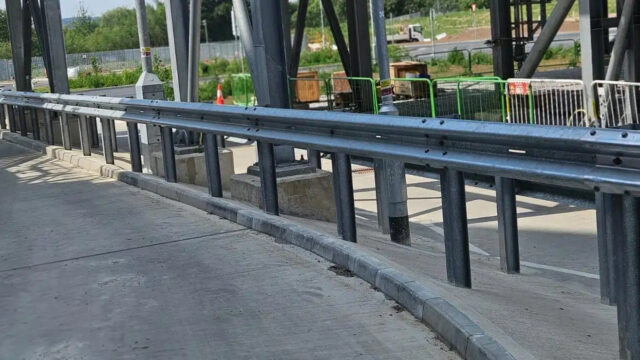
Armco barriers are one practical option for providing this kind of physical protection. Used appropriately as part of a wider site assessment, they can help shield people, infrastructure and equipment from vehicle impacts while making the boundaries between different areas of a site more apparent.
The right approach will depend on the individual premises, its layout and the vehicles and activities taking place there. Physical barriers are not a substitute for good traffic management, but they can provide an additional layer of protection where there is a clear risk of collision.
Workplace Protection Is Also a Business Continuity Issue
The consequences of a vehicle collision can extend beyond the immediate safety risk.
An impact involving a forklift or other industrial vehicle could damage machinery, racking, stock, doors, loading infrastructure or the building itself. Repairs may then take equipment or parts of a site out of use, potentially disrupting normal operations.
For growing businesses, avoiding unnecessary disruption matters.
This is why physical protection can be viewed not only as a workplace safety consideration, but also as part of protecting the continuity of day-to-day operations. Reducing the likelihood or consequences of vehicle impacts can help businesses protect the people working on site while also safeguarding the infrastructure they rely on.
Safety Should Grow with the Business
Yorkshire’s logistics and industrial growth creates opportunities for businesses across the region, but growth also brings changes to the way workplaces operate.
More vehicles, increased deliveries, changing layouts and expanding operations can all affect how people and traffic move around a site. For businesses operating from existing premises in particular, it is important not to assume that an established layout will automatically remain suitable as activity increases.
Reviewing workplace traffic arrangements whenever operations or site layouts change can help businesses identify where additional separation or physical protection may be needed.
For Yorkshire’s growing warehouses, factories and industrial sites, keeping safety arrangements in step with the business is an important part of building a workplace that can grow sustainably.
For advice on workplace vehicle protection and physical safety solutions, speak to the CT Safety team on (01977) 666 818.