





























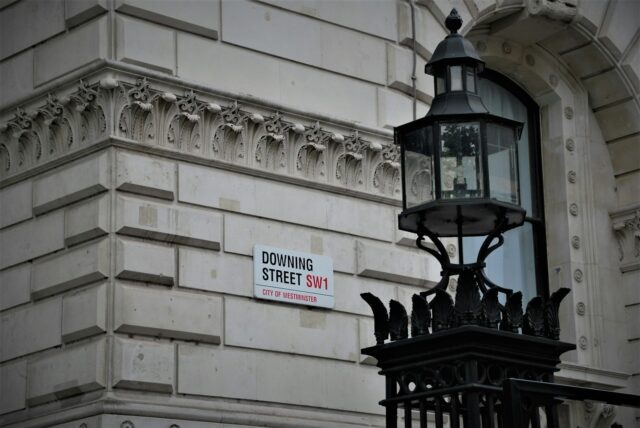
In a significant announcement, Andy Burnham has introduced a new Downing Street initiative based in Manchester, termed ‘No 10 North’. This team is set to oversee what Burnham describes as “the biggest rebalancing of power our country has ever seen”. The former mayor of Greater Manchester made this declaration during his inaugural speech following his bid to become the next Prime Minister of the United Kingdom.
Burnham’s vision centres on redistributing power throughout the UK, aiming to “drive good growth in every postcode”. He emphasised the need for a comprehensive approach to governance that prioritises local communities over centralised decision-making. Among his ambitious proposals is the largest council house building programme since the post-war era, alongside a “complete rethink” of the education system and significant cuts to welfare.
In response, Conservative leader Kemi Badenoch critiqued Burnham’s stance, suggesting that his support for devolution stems from a lack of direction, stating he “doesn’t know what to do so he wants to pass the problem to someone else”. Burnham’s announcement to stand as a candidate for Prime Minister came shortly after his election as the MP for Makerfield, making him the only Labour MP to declare his candidacy thus far. If he remains unopposed, he could potentially assume the role of Prime Minister as early as 20 July.
During his address at the People’s History Museum, Burnham spoke to an audience that included notable figures such as Steve Rotheram, Tracy Brabin, and Oliver Coppard, all of whom are his former mayoral colleagues from Liverpool, West Yorkshire, and South Yorkshire. While he provided a broad overview of his intended direction for governance, he refrained from detailing specific plans and notably did not entertain questions from the audience.
At the core of Burnham’s message was a commitment to devolving power to local communities, which he argued have been stifled by senior civil servants in Whitehall. He stated, “It is time for Whitehall to accept that growth cannot be ordered from the top down – it can only be nurtured from the bottom up.” This assertion highlights a fundamental shift in governance philosophy, advocating for local empowerment as a catalyst for regional growth.
While Burnham did not specify the exact powers to be devolved to different regions, he indicated that areas could expect “greater public control of essential services” such as water, energy, and transport. He also suggested that London might gain increased influence over education and housing matters. Furthermore, he expressed intentions to extend devolution opportunities in Scotland, Wales, and Northern Ireland, emphasising that citizens in places like Dundee and Bangor feel equally distant from their local governments as they do from Westminster.
Burnham believes that distributing power across the nation will provide “the circuit-breaker Britain needs”. The establishment of the No 10 North unit is envisioned as a mechanism to facilitate this transformation, enabling power to “flow” across the country and supporting regions in three critical areas: reforming essential utilities, reindustrialisation, and regeneration.
The potential positive impact of Burnham’s proposals on regional growth cannot be understated. In cities like Liverpool and Manchester, enhanced local governance could lead to tailored solutions that address specific community needs, fostering economic development and innovation. For instance, businesses in these regions may benefit from improved infrastructure and services, which could enhance operational efficiency and attract new investments.
Moreover, the focus on reindustrialisation could revitalise manufacturing sectors in the North East, creating jobs and stimulating local economies. By empowering local authorities to make decisions that reflect the unique characteristics of their areas, Burnham’s strategy could lead to a more dynamic and responsive economic landscape.
Labour’s 2024 manifesto has already committed to rolling out devolution powers to new areas and extending existing powers in regions where mayors and combined authorities are already established. In February 2025, Angela Rayner, then the local government secretary, announced plans for the introduction of six new mayors across Cheshire and Warrington, Cumbria, Essex, Hampshire and Solent, Norfolk and Suffolk, and Sussex and Brighton. This move aligns with Burnham’s vision of a more decentralised governance structure that empowers local leaders to drive growth and development.
As Burnham continues his campaign, the implications of his proposals for regional growth and business development will be closely scrutinised. The establishment of No 10 North could mark a pivotal moment in the UK’s political landscape, reshaping the relationship between central and local governments and potentially leading to a more equitable distribution of resources and opportunities across the nation.