





















A Yorkshire finance and investment expert has warned individuals and businesses not to make hasty financial decisions ahead of the Chancellor’s Autumn Statement on 26th November.
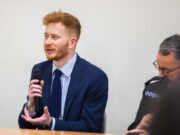
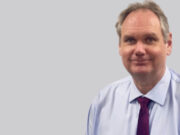
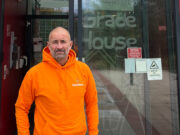
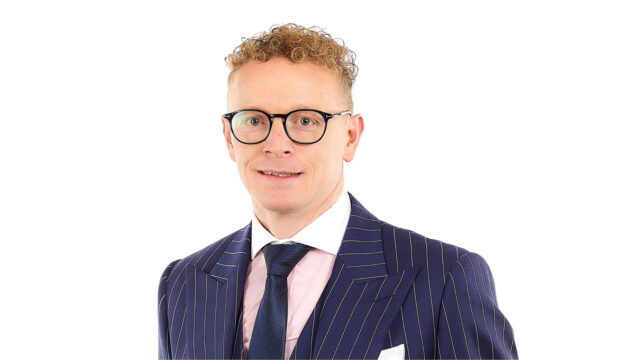
Shaun Wood, who is the Managing Director and Chief Investment Officer at Simpson Wood Financial Services in Leeds and Huddersfield, says there has been an uptick in anxiety, fuelled by the government’s lack of clarity around issues such as pensions’ allowances and income tax.
“Every day there’s a different headline in the press about what Rachel Reeves may or may not do in the upcoming Budget,” says Shaun. “By being opaque and making several u-turns, the government has fuelled uncertainty, so it’s understandable that people are nervous and may react as a way of trying to protect themselves. Financial decisions made in a panic are rarely a good idea, however, especially without specialist advice.”
One example of this is the 25% tax-free allowance that is currently in place for private pensions, meaning this portion can be withdrawn without incurring any tax. Widespread speculation that this allowance would be removed in the Budget, or that the cap on it would be reduced, resulted in an increase in the number of people prematurely withdrawing their allowance. The Treasury subsequently informed the press that any plans to reduce or remove the allowance had been scrapped.
“Most experts would advise against making these kinds of rash and panic-driven decisions based on media and commentator speculation,” says Shaun, “so it seems likely that this surge in withdrawals came primarily from people who have made their own provision and don’t currently have a professional advisor to rely on. It is certainly the case that removing your tax-free cash allowance from your pension has consequences: you’re moving money away from an already tax-advantaged account and bringing it into your estate; and if you keep it as cash, the long-term returns will be lower than inflation and its true value will therefore be eroded. It’s not a decision to make without advice.”
In recent weeks, uncertainty over the Chancellor’s intentions has fuelled a growing sense of public and market unease. A pattern of leaks, reversals and policy ambiguity on pensions, taxes, and the extent to which manifesto promises will be kept or overturned has impacted trust and confidence. Individuals and businesses have arguably increasingly felt left to make decisions in a fog of conjecture and mixed messages; and markets, industry and individuals have been responding to speculation before policy is confirmed, meaning that behaviour has increasingly been driven by rumour.
“There’s always some level of second-guessing just before a Budget, of course,” says Shaun, “but this has been different to what we’d generally see pre-Statement. There’s much more ambiguity, conflicting messages, and far more being described as ‘under consideration.’ There’s a big difference between predicting the adjustments that might be made to some taxes, and there being credible reports of multiple planned policy changes that are publicly talked about and then walked back. You can’t expect people to feel at ease in that kind of climate or to take in their stride the level of uncertainty it inevitably creates.”
Expecting people not to feel they must act to shore up the security of their families and businesses under these challenging circumstances is not realistic, says Shaun, who is concerned that, for some people, this may lead to mistakes that can have a negative long-term impact.
“What I would say to anyone concerned about this right now is not to make any hasty decisions and to please get expert advice before you make any changes to pensions, investments, or indeed any other financial arrangements. We really don’t want to see people lose out unnecessarily. What’s needed in times like these is the objective focus of a sector expert to help protect what you’ve worked so hard to build.”
The Autumn Statement will be delivered by the Chancellor of the Exchequer, Rachel Reeves, on 26th November 2025. Earlier this month, Ms Reeves cited lower-than-expected productivity as being behind many of the “difficult decisions” she may have to make in the Budget, going on to state that “each of us must do our bit for the security of our country.”