




























A new survey from flexible workspace provider Orega reveals that more than one in three Manchester office workers (34%) say rainy weather negatively affects their motivation or productivity. Meanwhile, over half (52%) admit wet weather makes them reconsider commuting into the office, highlighting the need for workspaces that feel inviting and motivating as we head into spring showers season.
In a city that repeatedly ranks among the rainiest locations in the UK with an average of 171 rainy days per year, the findings point to a broader shift in how external factors are shaping hybrid work behaviour.
Manchester workers appear slightly more weather-sensitive than the national average with 17% saying rain significantly impacts their decision to commute, compared to 12% nationally, suggesting local climate realities may be reinforcing flexible working habits in the region.
Yet the picture isn’t one of widespread avoidance as nearly half of Manchester employees (48%) say rain doesn’t stop them commuting, underlining the city’s resilience in the face of its regular downpours. Instead, the data suggests many workers are making more nuanced decisions, weighing comfort, convenience and purpose against the reality of a rainy journey.
Lucas Botzen, HR expert at Rivermate shares his perspective:
“For many people, dark, wet, or cold conditions can make the journey feel more stressful or exhausting, which can reduce their willingness to travel and affect their energy levels for the workday. Beyond commuting, rainy weather can also influence mood and focus more generally. It’s not always drastic, but over time, a series of gloomy, wet days can subtly lower motivation and engagement if employees feel less energized or cooped up indoors.”
“Offering flexible working arrangements can help employees avoid the stress of commuting while still staying productive. Employers can also focus on creating a positive and energising office environment with spaces for social connection, or small perks like hot drinks or casual check-ins, to counteract the dreariness of the weather.”
Mood, motivation and the psychology of grey skies
25% of Manchester workers report feeling slightly less productive on rainy days, and 9% feel noticeably less productive showing that the toll of wet and gloomy weather extends beyond an unpleasant commute.
Studies have shown that rainy days can influence mood and emotional wellbeing, suggesting people report lower momentary happiness during wet conditions compared to sunny days. Psychologists have also noted that weather can affect mood through symbolic associations, with sunshine linked to positive outdoor experiences, while grey skies can evoke cancelled plans or inconvenience.
Despite this, experts caution against assuming rain always reduces productivity. Global People & Culture Expert, Carly Jenner, notes that dreary weather can sometimes actually increase focus:
“Wet and rainy weather does affect employee motivation, but not always in the way we assume. In fact, dreary weather can actually increase focus and productivity because there’s less temptation to be outside enjoying the sun/good weather. With fewer external distractions, people can often concentrate more deeply and employee productivity actually increases.
“Where bad weather really makes a difference is in people’s willingness to commute. For many employees, the extra effort, stress, and lost time that comes with commuting in bad weather can meaningfully reduce their willingness to go into a physical workplace, particularly for high-performing talent who are highly protective of their time and work–life balance. That’s where flexibility becomes an appealing alternative.”
Designing workplaces people want to commute for
Encouragingly, Orega’s research highlights a clear solution, revealing that workplace design and comfort can significantly influence behaviour and motivation when it comes to commuting into an office.
66% of Manchester workers say access to a comfortable, well-designed office space would make commuting in the rain more appealing, proving that even in one of the UK’s rainiest cities, a well-designed office can tip the scales.
With hybrid working now firmly embedded and around 34% of full time employees making use of hybrid arrangements, the role of the office is increasingly shifting toward providing an experience that justifies the commute – particularly in wet weather.
For businesses looking to create an inviting and motivating workspace, Mathew Moore, Marketing Director at Orega, shares his top five tips:
1) Lighting control
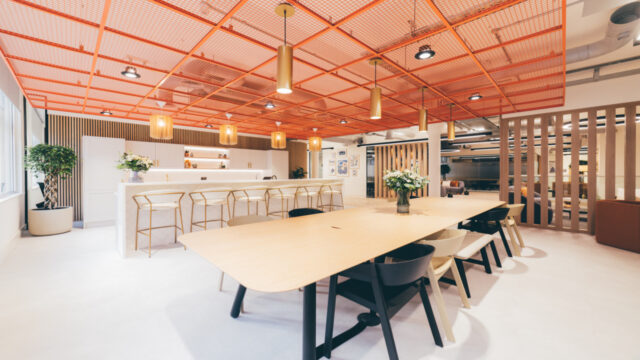
“During bad weather, moving away from harsh lighting to instead use a mix of lamps and accent lighting can create a warmer and more inviting environment. Maximising daylight is also crucial. Make the most of the natural light by keeping windows clear of obstructions and positioning desks near them.”
2) Bringing nature indoors
“Incorporating natural materials such as wood, stone and wool will add warmth and reduce stress. Mix these materials with greenery in the form of indoor plants and choose furniture with soft lines to create a less clinical feel.”
3) Breakout spaces
“Having breakout spaces to connect with colleagues and get a change of scenery throughout the day is an important element of our workspaces. Being able to move around the office during the day to spaces where you can take a break, collaborate, or work in a more relaxed setting makes the office a much more enjoyable place to be.”
4) Functional features
“Another key feature of all our workplaces is their high-spec functionality which provides extra perks that not everyone has access to at home. Things like zoned temperature control, soundproof meeting pods and tech-enabled meeting rooms all help to make the office a more appealing choice.”
5) Workplace experience
“Design is important but how a space feels day-to-day matters just as much. A friendly, professional on-site team, small thoughtful touches and a consistently high level of service can genuinely lift morale, especially on dark, wet days when energy can dip. When people feel welcomed, supported and valued, the office becomes somewhere they want to be, not somewhere they have to be.”
A flexible future for rainy cities
For Orega, which operates four flexible workspace locations across Manchester city centre, the findings reinforce the importance of offering adaptable environments that remove friction from the working day.
Mathew Moore adds:
“Manchester’s weather isn’t changing any time soon, but how people work within it certainly is. Our data shows that employees aren’t necessarily avoiding the office, but that they are being more intentional about when and why they come in.
“When the workspace feels comfortable, well-designed and genuinely supports productivity, it becomes a worthwhile destination rather than an obligation. Our focus has always been on creating professional but inviting environments where businesses can concentrate on what matters most, whether that’s collaboration, focused work or simply having a reliable base in the heart of the city.
“With four locations across Manchester covering different areas of the city centre, our goal is to make coming into the office as convenient and appealing as possible, even on the wettest days and in that respect, we really do have Manchester covered.”